
Relationship between inclusive school and teaching skills
Keywords:
inclusive school, special needs, evaluation methods, teaching competenceSynopsis
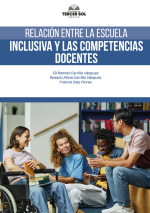
The legal theoretical transfer of the concept of disability has caused a global change in which the person with disabilities is recognized as a human being who has rights and equal opportunities with others in all areas of social life. (Hernández, 2015, p. 46). Although there is legal support for the inclusion of people with special needs, it seems that this issue is still conceived as a favor and not as a right, particularly in schools.
It is common to observe parents carrying out arduous searches to find schools that accept their children; and some, without success, enrolling them in special educational centers, but why does this happen? The answer is simple: throughout time, children with disabilities have been considered as beings to be pitied, as people who cannot help themselves; However, this position is totally misleading.
Unfortunately, schools have also adopted this wrong thinking, and many, instead of adapting their educational system to the needs of these children, choose to restrict their entry. The classic argument rests on the following: “this educational center does not have the capacity to meet the needs of your child.” However, on many occasions, there is no interest in the topic, since the students' disabilities are mild and could easily be overcome by the institution.
Unfortunately, there is an almost automatic denial on the part of institutions regarding the acceptance of students with disabilities, since their presence possibly implies more work; However, the achievements that can be achieved have greater value: professional growth for teachers, consolidation of values and empathy in students, creation of an inclusive and tolerant school culture in the community in general.
How many schools are really interested in this aspect? How many care about creating an inclusive educational culture? How many are interested in true educational growth? Creating an inclusive school is not an impossible challenge, but it requires the support of the entire educational community, that is, it requires a solid organization, mainly from the agents who guide learning: the teachers.
As is known, the majority of teachers are trained to guide the learning of students with homogeneous needs, but not for students with special needs, since there is no system that is concerned with developing skills in teachers that allow them to face new challenges. The core of the problem is not the insertion of these students into school classrooms, but the lack of attention paid to them.
Many teachers are not prepared to guide the teaching of students with certain disabilities, since they have automated their class sessions and have forgotten to update their academic methodologies. Likewise, they do not invest time to develop innovative materials and have not systematized an inclusive evaluation method. For all this, organization and interest are needed.
In this sense, this research seeks to identify the relationship that exists between teaching competencies and the inclusive school, in order to establish a series of reflections that promote the creation or strengthening of an inclusive, democratic and fair school culture in educational centers.
Downloads
Download data is not yet available.
Downloads
Published
February 7, 2023
Categories
Copyright (c) 2023 Submission Editorial Tercer Sol


 Av. Insurgentes sur 2387, Alcaldía Álvaro Obregón, Ciudad de México.
 Omar Roldán: contacto@editorialtercersol.com
 +52 55 56619070