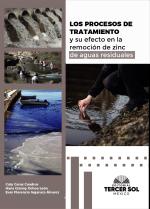
Treatment processes and their effect on zinc removal from wastewater

Authors

Caty Ceras Cuadros
Universidad Nacional del Centro del Perú
https://orcid.org/0000-0001-6251-534X
Ever Florencio Ingaruca Álvarez
Universidad Nacional del Centro del Perú
https://orcid.org/0000-0003-4142-4507
Hans Gianny Ochoa León
Universidad Peruana Los Andes
https://orcid.org/0000-0002-5673-8077

Keywords:

Sewage treatment, zinc removal

Synopsis

Mining activity is necessary in the economic development of Peru; however, it can cause negative outcomes such as pollution and destruction. In this sense, mining activity can affect water resources in various ways, such as contaminating surface and underground sources and human consumption, seriously affecting natural resources such as water. For this reason, measures must be taken that cooperate with the reduction of water infected by substances from mining activity. The treatment of wastewater from mining involves a number of chemical, physical and biological processes that restructure the composition of water in order for this natural resource to be favorable for human and animal consumption. In addition, this treatment involves taking samples to check the state of the water (specifically wastewater). The concentration of minerals or other substances around the planet are the result of human activities and natural phenomena. In the case of water, the increase in anthropogenic actions greatly facilitates its chemical, physical and organic contamination, presenting heavy metals such as lead, cadmium, chromium and zinc, which are discharged into aquatic ecosystems. One of these metals is zinc; This chemical element is necessary for biological organisms, although its high concentration is a toxic compound that can pose a risk to life in the water, especially to fish. In this sense, it is deduced that the removal of zinc from wastewater is an action that contributes to the preservation of fish species. Furthermore, the existence of this concentration of metals or other substances makes it possible to carry out studies that try to improve the chemical and physical conditions of wastewater in order to reuse such water and favor the different species of life that exist in the world, which is the topic of interest of the present work.


Cite (APA)

Cómo citar

Ceras, C., Ingaruca, E., & Ochoa, H. (2023). Los procesos de tratamiento y su efecto en la remoción de zinc de aguas residuales. Editorial Tercer Sol. https://submission.editorialtercersol.com/index.php/SETS/catalog/book/77

Downloads

Download data is not yet available.
Author Biographies

Caty Ceras Cuadros, Universidad Nacional del Centro del Perú

Chemical Engineer graduated from the National University of Central Peru, registered with CIP No. 148896, with a master's degree in Safety and Environment in Mining and completed doctoral studies in Chemical and Environmental Engineering. She has experience as a junior analyst and management of the Atomic Absorption team, at the company Bureau Veritas Inspectorate Services Perú S.A.C.; documentary control in the safety management system and as Inspector – Preventionist in Safety, Health and Environment; university professor at the Faculty of Chemical Engineering of the UNCP, belonging to the UNCP Nanotechnology research line, preparation of nanomaterials, synthesis and characterization of nanoparticles for wastewater treatment.

Ever Florencio Ingaruca Álvarez, Universidad Nacional del Centro del Perú

Chemical engineer. He graduated from the National University of Central Peru. Master in Environmental Chemical Engineering from the National University of Trujillo. Completed PhD studies in Chemical Engineering, Universidad Nacional Mayor de San Marcos. Completed Master's studies in Engineering Sciences with a mention in Chemical Engineering, University of Concepción, Chile. Completed studies of Second Specialization in Natural Gas Engineering at the National University of San Antonio Abad of Cusco. Coordinator of the Nanoscience and Nanotechnology Research Group (NanoTech) FIQ-UNCP, Head of the Nanotechnology Laboratory of the FIQ-UNCP. Advisor to the AIChE Student Chapter, UNCP, Advisor representing the Universities of Junín before the Water Resources Council of the Interregional Mantaro Basin. Professor at the Faculty of Chemical Engineering at the National University of Central Peru. Responsible for Research Projects of the NanoTech Group, National University of Central Peru. Author and co-author of scientific articles in national and international magazines. Speaker at national and foreign academic events. Main lines of research in wastewater, bioprocesses, materials science, synthesis and characterization of nanoparticles. Experience in formulation, evaluation and execution of environmental projects for the public and private sectors. Extensive experience in environmental studies

Hans Gianny Ochoa León, Universidad Peruana Los Andes

Chemical Engineer graduated from the National University of Central Peru, registered with CIP No. 148940, with a Master's degree in Safety and Environment in Mining. With professional experience as a chemical laboratory analyst; experience as a professional inspector in Chemical Inputs and Controlled Goods in the Audit Division at the I.R. Junín and in the National Administration of Chemical Inputs and Controlled Goods of the SUNAT. University professor assigned to the Faculty of Health Sciences of the Universidad Peruana Los Andes. Researcher in the nanotechnology line belonging to the UNCP Nanotechnology research line, preparation of nanomaterials, synthesis and characterization of nanoparticles for wastewater treatment.

Downloads

Published

October 25, 2023

Categories